ASIC to Physical AI

Building AI systems that connect to the physical world.

A veteran Korean engineer with 30+ years across ASIC, FPGA, embedded Linux, networking, Vision AI, AIoT and edge-to-server infrastructure.

About / Identity

Not a generic developer profile. A real-world intelligence systems profile.

Physical AI / Edge AI / Embedded Intelligence Architect

Jin Won has built across the full stack of physical computing: ASIC and FPGA foundations, embedded hardware, firmware, Embedded Linux, OpenWRT, VoIP, networking infrastructure, Python backend systems, AIoT and Vision AI on Jetson platforms. The differentiator is continuity: engineering judgment formed in the semiconductor era and applied to the AI era.
Recognition Samsung Group Silver Prize Award

A visible proof point for high-impact engineering execution, innovation and product-oriented technical contribution.

Origin Early Korean ASIC development engineer

A rare semiconductor-era background that connects hardware architecture, digital logic and modern AI infrastructure.

Engineering Philosophy

AI without devices, networks and reliability is incomplete.

01

AI must touch the physical world.

Real intelligence is measured where sensors, power, heat, latency, firmware and field networks meet.

02

Infrastructure is part of the model.

Edge devices, protocol paths and server operations decide whether AI becomes a working system.

03

Reliability is an AI requirement.

Industrial intelligence needs deterministic engineering, not demos that fail outside the lab.

ASIC to AI Timeline

A deep-tech path from early semiconductor systems to Physical AI.

ASICASIC Era

One of Korea's early ASIC development engineers; verification responsibility for Samsung Group's first facsimile ASIC.

FPGAFPGA Era

Digital logic, VHDL, OrCAD, Altium, PSpice and PADS based hardware engineering practice.

LINUXEmbedded Linux Era

Embedded Linux, OpenWRT, ARM/MIPS cross-compilation, middleware and real-world device integration.

NETNetworking Infrastructure Era

VoIP, LAN/WAN, routers, switches, VPN, DSL, AMI, PoE and industrial connectivity.

EDGE AIEdge AI Era

Python backend/server development, Edge AI service architecture and edge-to-server data paths.

VISIONVision AI Era

Jetson Nano, camera integration, embedded inference and AIoT vision workflows.

PHYSICAL AIPhysical AI Era

Device-to-cloud intelligence systems where AI interacts with sensors, hardware and industrial environments.

Edge AI Architecture

Intelligence is a pipeline from sensor physics to cloud-scale context.

Sensors / Cameras
Embedded Linux / OpenWRT
Jetson Vision AI
Edge-to-Server Networking
Industrial AI Services

Physical AI Projects

Projects are framed as systems, platforms and infrastructure.

01

Vision AI / Jetson Systems

Jetson Nano and edge vision work involving IP cameras, image sensor boards, embedded inference and physical scene interpretation.

02

Embedded Linux / OpenWRT Platforms

Device firmware, OpenWRT, ARM/MIPS environments, middleware and Linux-based embedded product architecture.

03

Infrastructure & Networking Systems

VoIP, routers, switches, VPN, LAN/WAN, DSL, Wi-Fi HaLow, PoE, AMI and industrial network operations.

04

Device-to-Cloud AI Infrastructure

Python backend/server development, web service architecture, web applications and edge-to-server integration.

05

Hardware-Integrated Intelligence

ASIC, FPGA, VHDL, OrCAD, Altium, PSpice and PADS experience applied to modern embedded AI systems.

06

Industrial AI Planning & Support

Technical support, infrastructure diagnosis, new business planning and system-level guidance for real-world AI adoption.

WaterMag Logger v0.1

Field Systems

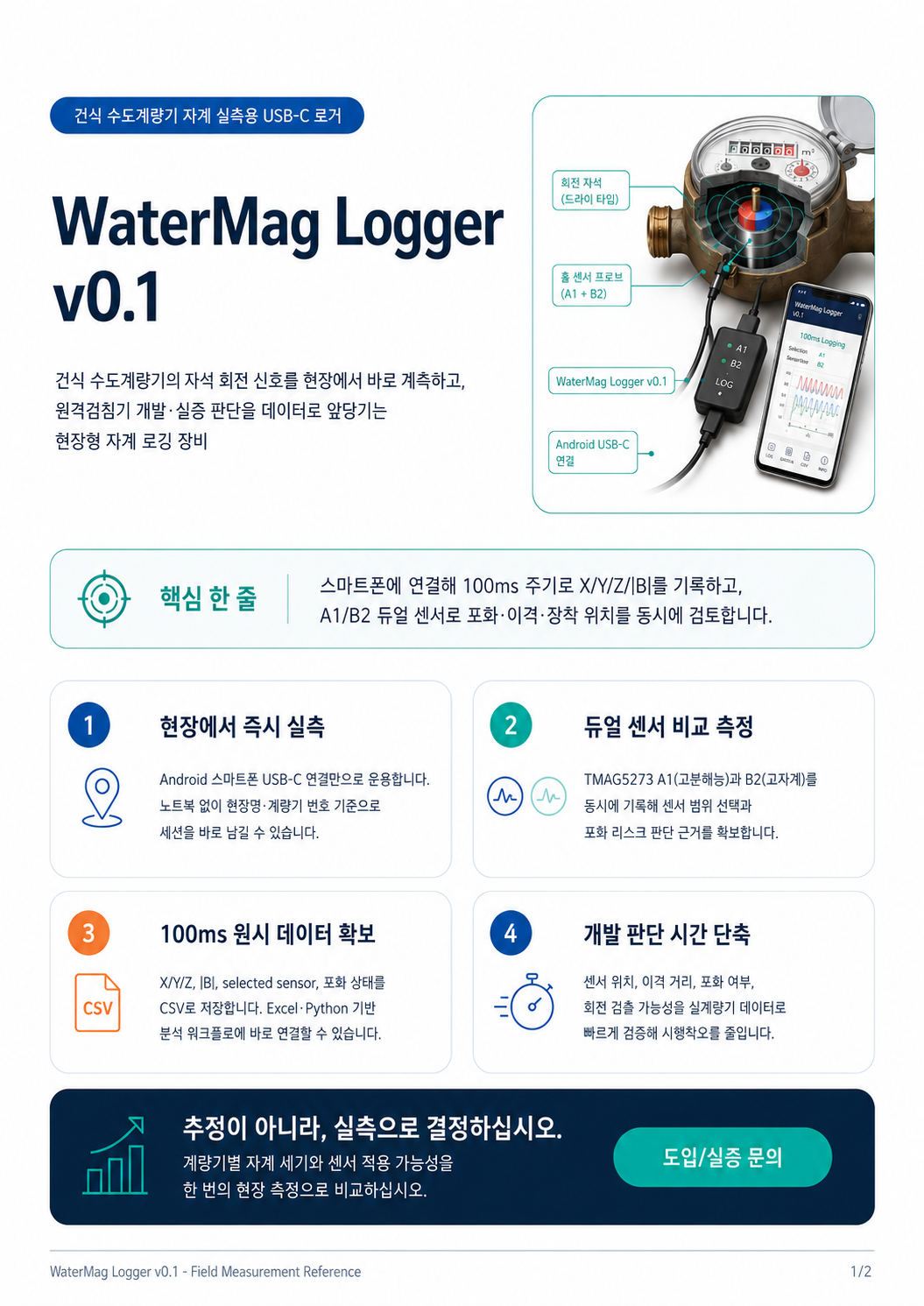
WaterMag Logger v0.1 — USB-C Magnetic-Field Logger for Dry Water Meters

First page of the WaterMag Logger v0.1 leaflet explaining field magnetic pattern logging for water meters with smartphone USB-C connection, A1+B2 sensors, and 100 ms CSV logging.
Leaflet P1
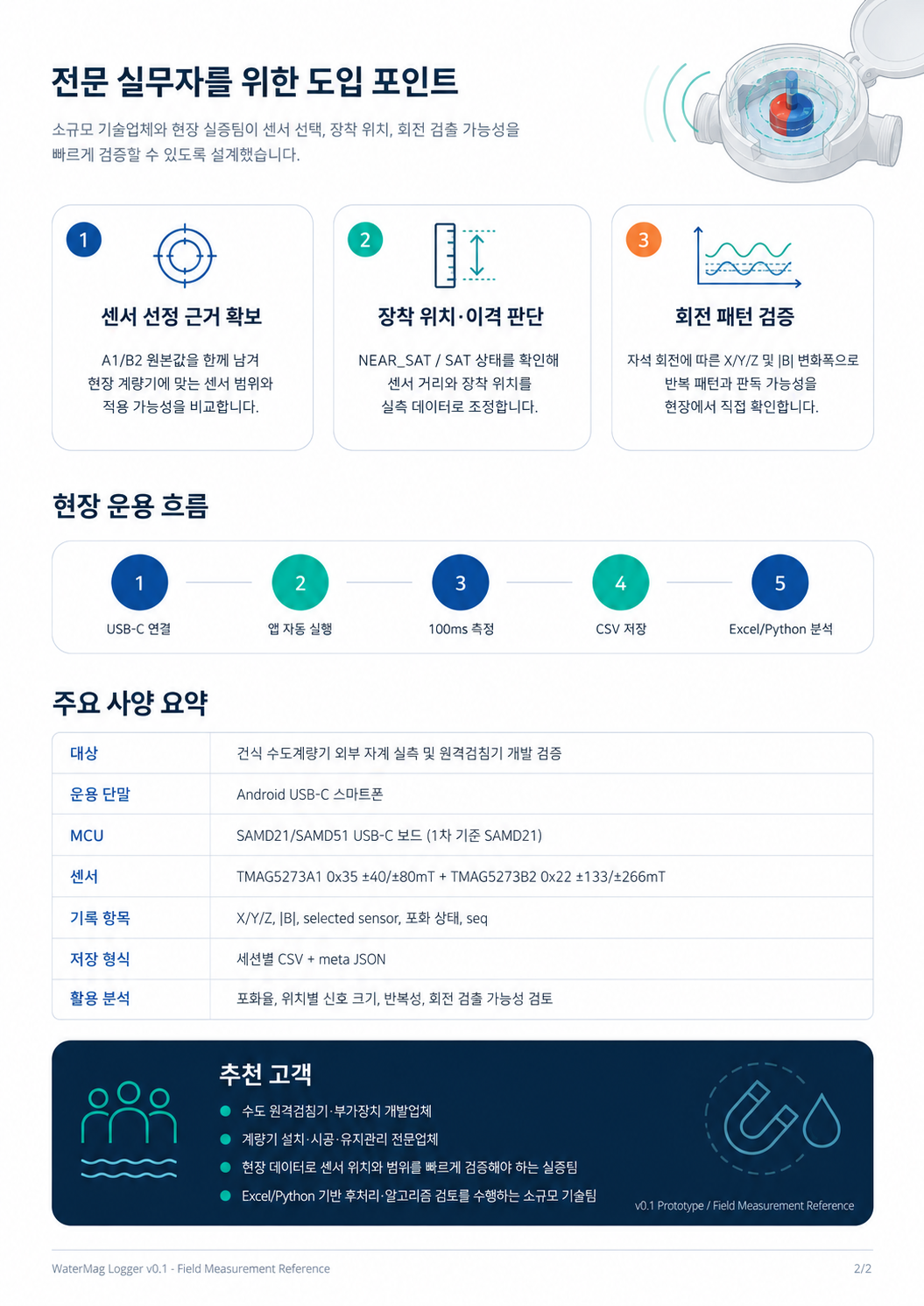
Second page of the WaterMag Logger v0.1 leaflet summarizing customer value, field workflow, key specifications, and recommended customers.
Leaflet P2

WaterMag Logger v0.1

A USB-C magnetic-field logger that records dry water meter rotation signals directly in the field, checks saturation risk and mounting position, and accelerates final AMR device design decisions with real data.

Plug it into a smartphone and check magnetic rotation signals and saturation risk at the same time.
Magnetic Logging A1 + B2 USB-C 100 ms CSV Field Validation
01

Measure with a Field Phone

Connect it to an Android USB-C smartphone, start the app, and save sessions by site name and meter ID.

02

Check Saturation with Dual Sensors

Record low-field high-resolution A1 and high-field B2 together to judge saturation risk near the mounting position.

03

100 ms Raw CSV Logging

Save X/Y/Z and |B| values at 10 Hz so they can be compared directly in Excel or Python for repeatability review.

04

Reduce Pre-Production Decision Cost

Use real meter data to narrow sensor range, position, spacing, and rotation-detection feasibility before productization.

Practical Value for Customers

Validate lab assumptions with field data and accelerate the final design of AMR / remote meter reading devices.

  • Sensor selection evidence
  • Spacing and saturation judgment using NEAR_SAT/SAT
  • X/Y/Z and |B| repeatable pattern validation
USB-C connection App auto-start 100 ms measurement CSV save Analysis / decision
TargetField magnetic measurement for Korean dry water meters
MCUSAMD21/SAMD51 USB-C board, first target SAMD21
SensorsTMAG5273A1 0x35 ±40/±80mT + TMAG5273B2 0x22 ±133/±266mT
Measurement100 ms interval, X/Y/Z/|B|, selected sensor, saturation state
StorageCSV and metadata by site name, meter ID, and date/time
AnalysisExcel/Python review of A1/B2 saturation rate, pattern repeatability, and signal strength by position
Discuss Field Sensing Validation AMR / Sensor System Consultation

Achievements & Awards

Credibility built through real products, not presentation decks.

Major Award

Samsung Group Silver Prize Award

Positioned as evidence of high-impact engineering excellence, innovation capability and product execution.

Pioneer Signal

One of Korea's first ASIC development engineers

A historical semiconductor engineering foundation spanning the ASIC era to the AI era.

Engineering Depth

30+ years across hardware, network and software systems

Embedded systems, AI, Edge AI computing, AIoT, industrial systems and infrastructure architecture.

Technology Domains

Grouped for AI-era systems thinking.

Physical AIEdge AIEmbedded IntelligenceVision AIAIoTIndustrial AIReal-Time SystemsEmbedded LinuxOpenWRTJetson NanoFPGAASICVHDLPython BackendWeb Service ArchitectureVoIPMiddlewareNetwork InfrastructureOrCADAltiumPSpicePADSDevice IntegrationTechnical SupportNew Business Planning

Career Timeline

The recurring pattern: complex systems made operational.

Semiconductor and facsimile systems

Samsung Group Silver Prize Award and early ASIC verification work.

Embedded hardware and industrial systems

Digital circuits, FPGA/VHDL, firmware, tooling and field technical support.

Networking and connected infrastructure

OpenWRT, VoIP, LAN/WAN, AMI, routers, switches, VPN and device connectivity.

AI-era edge systems

Jetson Vision AI, AIoT, Python backend/server development and device-to-cloud architecture.

Contact

For Physical AI, Edge AI and embedded infrastructure problems.

Best fit: AIoT architecture, device-to-cloud systems, Vision AI, Embedded Linux/OpenWRT, industrial networking, technical due diligence and recovery of difficult engineering projects.